There are many different food allergy and sensitivity tests on the market. Finding one that not only fits your budget but also provides adequate information is key. There are blood spot tests and ones that require a blood draw. The most important aspect is to select one that includes IgE, IgG4, IgG and Complement. These are 4 different markers looking at how foods react in your body. A good comparison is when you get your Cholesterol drawn. You don’t just look at Total Cholesterol. You also measure HDL, LDL and VLDL.
Why your food sensitivity test should include these important markers:
- Immunoglobulin E (IgE) – This antibody response is an allergic reaction to foods and typically occurs within 3 hours after exposure. These foods must be removed if elevated or if you have a known severe anaphylactic reaction. If the test comes back showing you do not have an allergy to a known food allergen, do not add it back in without physician supervision. (It is possible to grow out of a food allergy but also know, lab tests are not perfect).
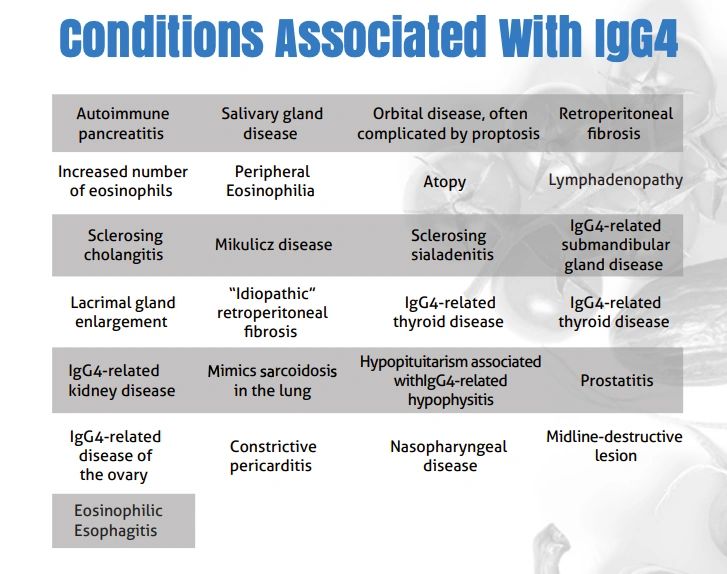
- Immunoglobulin G4 (IgG4) – This test has the blocking potential of antigen response that may act as protection against allergic reaction to certain foods. It is also important to remove these foods if they are elevated due to being highly associated with auto-immune conditions.
- Immunoglobulin G: IgG is the most common type of antibody in your blood and other body fluids. These antibodies protect you against infection by “remembering” which germs in which you have been exposed. When IgG foods test positive, your body is seeing the food as something harmful and ignites an immune response. This antibody response may cause food sensitivities with a delayed reaction occurring 3-72 hours after exposure. It’s hard to remember what you ate 3 days ago so testing is extremely helpful. IgG intolerances are based on frequency, amount and tolerance. That is why you don’t want to eat the same foods daily and develop new sensitivities.
- C3d and C3b (Complement) – The Complement pathway is highly associated with inflammation. When detected, it can amplify symptoms tremendously. Higher levels of C3d/C3b in the body suggests higher sensitivity and intolerance to certain foods. All detected Complement foods must be removed.
Zonulin – Zonulin is a test that measures the permeability of the gut lining. It is a protein that modulates the permeability of tight junctions between gut lining cells. Gluten is a commonly known to increase Zonulin, break apart the tight junctures and cause leaky gut.